
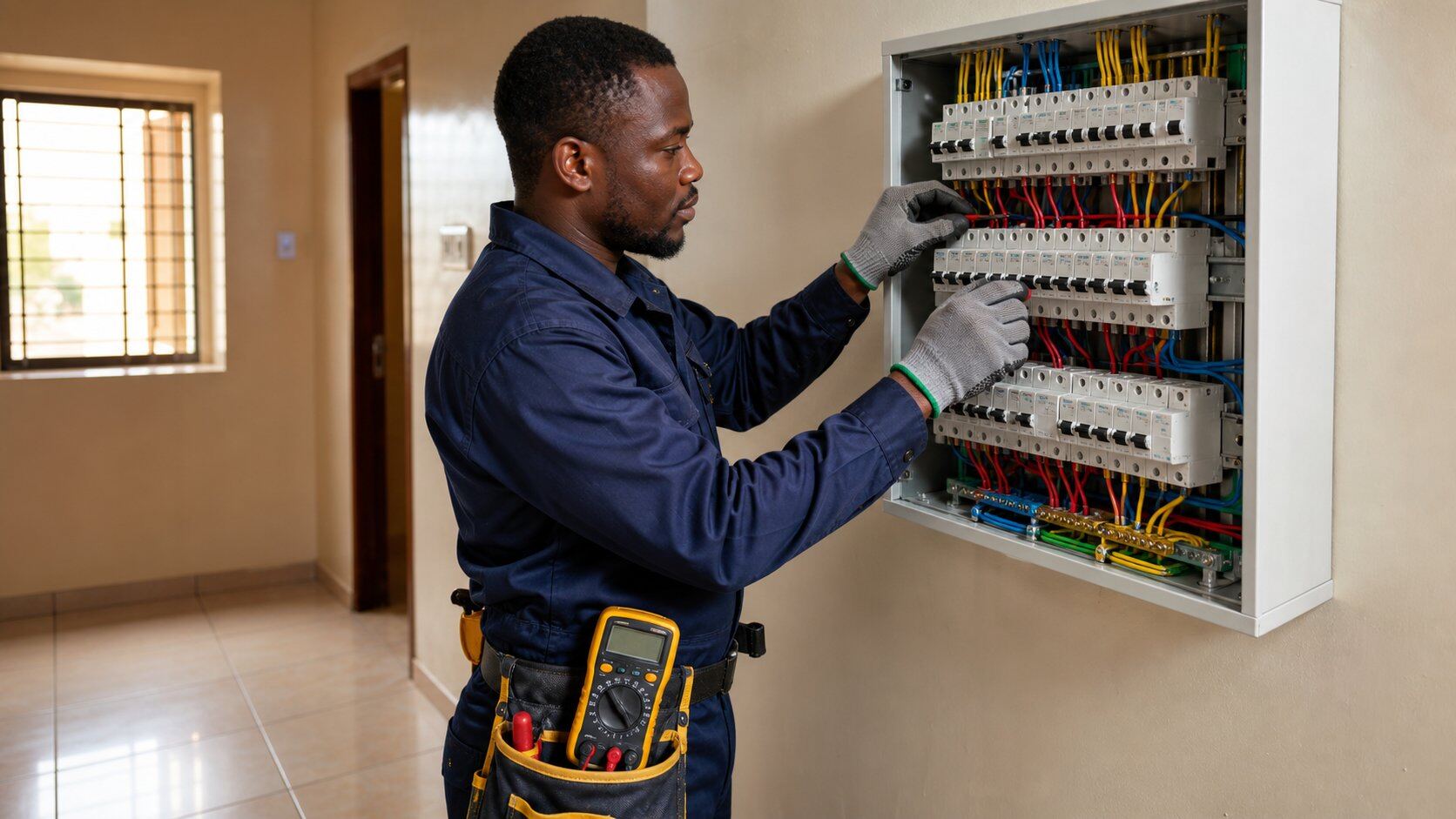
Electrical faults rarely arrive without warning. They announce themselves for weeks in small ways that are easy to live with and easy to ignore. These are the five we treat as urgent, and what each one is usually telling you.
1. Breakers that trip at the same time every day
A breaker doing its job occasionally is fine. A breaker that goes at the same moment each evening is describing a pattern — a circuit carrying more than it was designed for, at the hour when everything comes on at once.
The dangerous response is a larger breaker. That does not fix the overload; it removes the protection and leaves the cable, which has not changed size, carrying current it was never rated for. The correct response is to measure the circuit and redistribute or upgrade it properly.
2. Warm switches, sockets or a warm distribution board
Electrical accessories should be at room temperature. Warmth means resistance, and resistance at a connection means a loose terminal, a corroded joint or an undersized conductor.
This is the sign we treat most seriously, because heat at a bad connection is progressive — it degrades the joint, which increases resistance, which produces more heat. Any hot accessory or discoloured, smelling board should be inspected without waiting.
3. Lights that dim when a motor starts
A brief dip when the pump or air conditioner kicks in is normal in most homes. A visible, repeated dip across the whole house suggests supply-side voltage drop, an overloaded main, or an undersized cable somewhere between the meter and the board.
Left alone, the same voltage sag shortens the life of every motor and power supply in the building, including the inverter you may be about to buy.
4. Bills or fuel use climbing with no change in habits
When consumption rises while behaviour stays flat, something is drawing power that should not be. Common culprits are a failing fridge compressor, a borehole pump cycling because of a leak, a faulty water heater thermostat, or an old inverter idling badly.
An audit finds it by measurement rather than suspicion, which is usually far cheaper than replacing appliances one at a time hoping to guess right.
5. You are about to buy solar, an inverter or a generator
This is the moment an audit pays for itself most obviously. Sizing any backup system without measured consumption is guesswork, and guesswork is expensive in both directions — an oversized system wastes capital, an undersized one trips and dies early.
An audit also finds the faults worth fixing before the new equipment is connected. Putting a good inverter onto a board with a loose neutral simply gives the fault a more expensive victim.
Tripping breakers, warm accessories, dimming lights, unexplained bills, or a pending backup purchase — any one of these justifies measuring the installation properly. Our site inspection and load audit are free, and we would rather tell you nothing is wrong than sell you something you do not need.